
Nobody had a good answer, mostly because nobody had really tried. Trailer manufacturing and truck equipment work have always sat in separate corners of the industry, built by different people who rarely talk to each other. Gridko happens to sit in both. And once that question was on the table, the team couldn’t put it back down.
How Most Trailers Move Their Hoist, And Why It’s A Problem
To understand what stuck with Gridko’s engineers, it helps to know how a roll off or dump trailer normally works. The hoist itself is always hydraulic. Pistons do the actual lifting, no matter what. What changes from trailer to trailer is what powers the hydraulic pump.
Plenty of trailers run electric-over-hydraulic, where the pump draws off electric power, usually 12V batteries onboard the trailer, or the truck’s own battery system paired with an onboard charger. It’s simple and self-contained, with no engine or PTO involved. But a battery only holds so much charge, and heavy, repeated cycles drain it fast.
The heavier-duty option is a fully hydraulic system, built for more power, speed, and durability than a battery can sustain. Fully hydraulic setups have traditionally been powered by a pony motor, a small auxiliary engine bolted on just to run the hydraulic pump. It works, and Gridko still offers it as a reliable, proven configuration. But it also means fueling, servicing, and eventually replacing a second engine that exists for no other reason than to keep the hoist running.
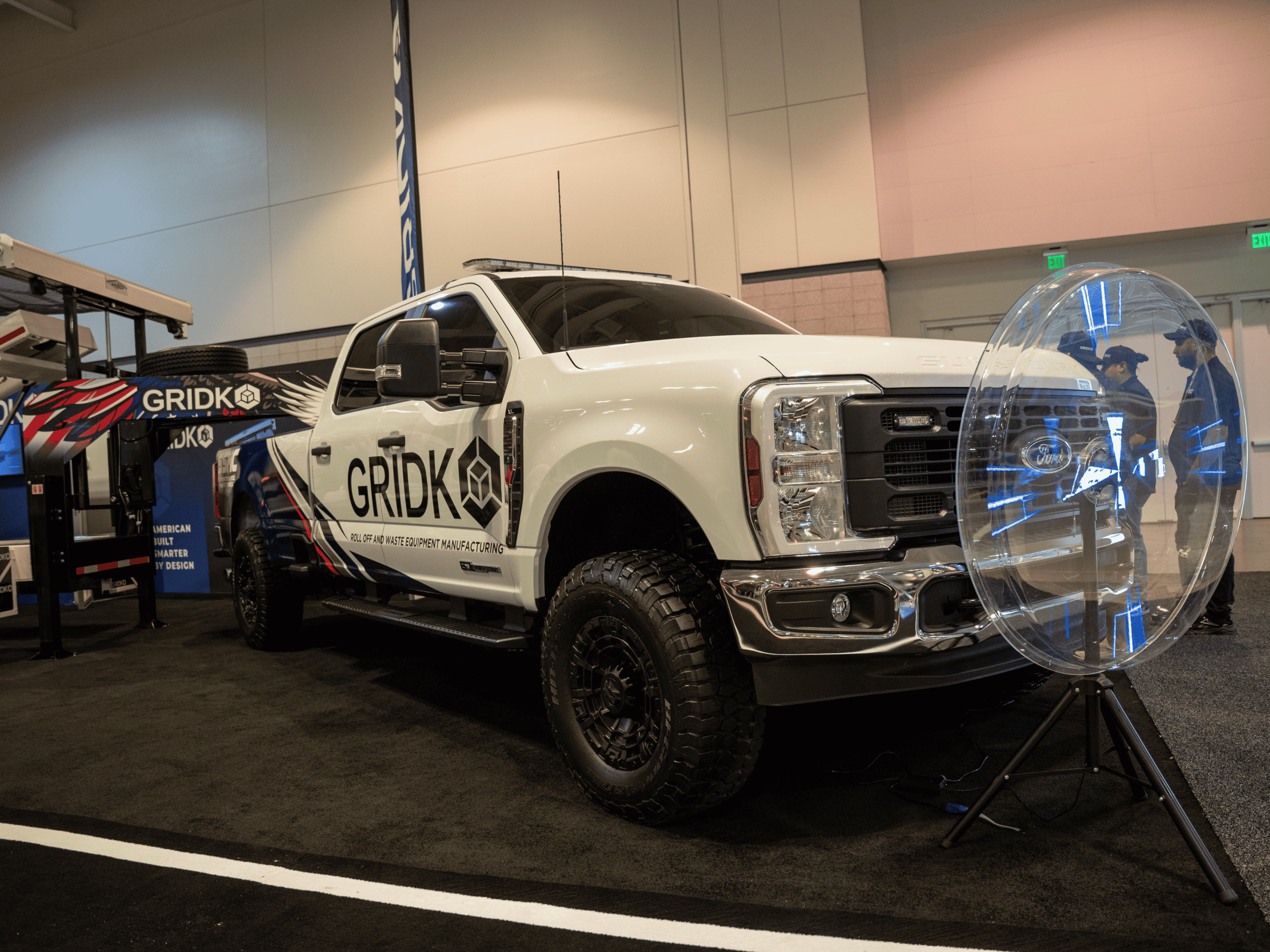
That’s the part Gridko’s engineers couldn’t stop thinking about. Trucks solve this exact problem already, with a PTO pulling power straight off the engine and transmission. So the team built an alternative: connecting the trailer’s hydraulic system directly to the tow vehicle’s PTO, the way Gridko did on a new Ford F-250 build showcased at the show. Running off the PTO does not just remove the need for a second engine, it also runs faster than a traditional pony motor setup, while still delivering the full power of a fully hydraulic system.
That setup runs on Gridko’s own PTO Wet Kit for trucks already equipped with PTO provisions. For trucks that aren’t, Gridko offers a clutch pump that bolts directly onto the vehicle and draws off the engine’s existing power, extending PTO-equivalent capability to trucks that were never built for it in the first place. Either way, fleets get a real choice between the two fully hydraulic setups, each built around the industry’s most durable hoist configuration.
Building The Live Drive PTO Trailer From the Ground Up
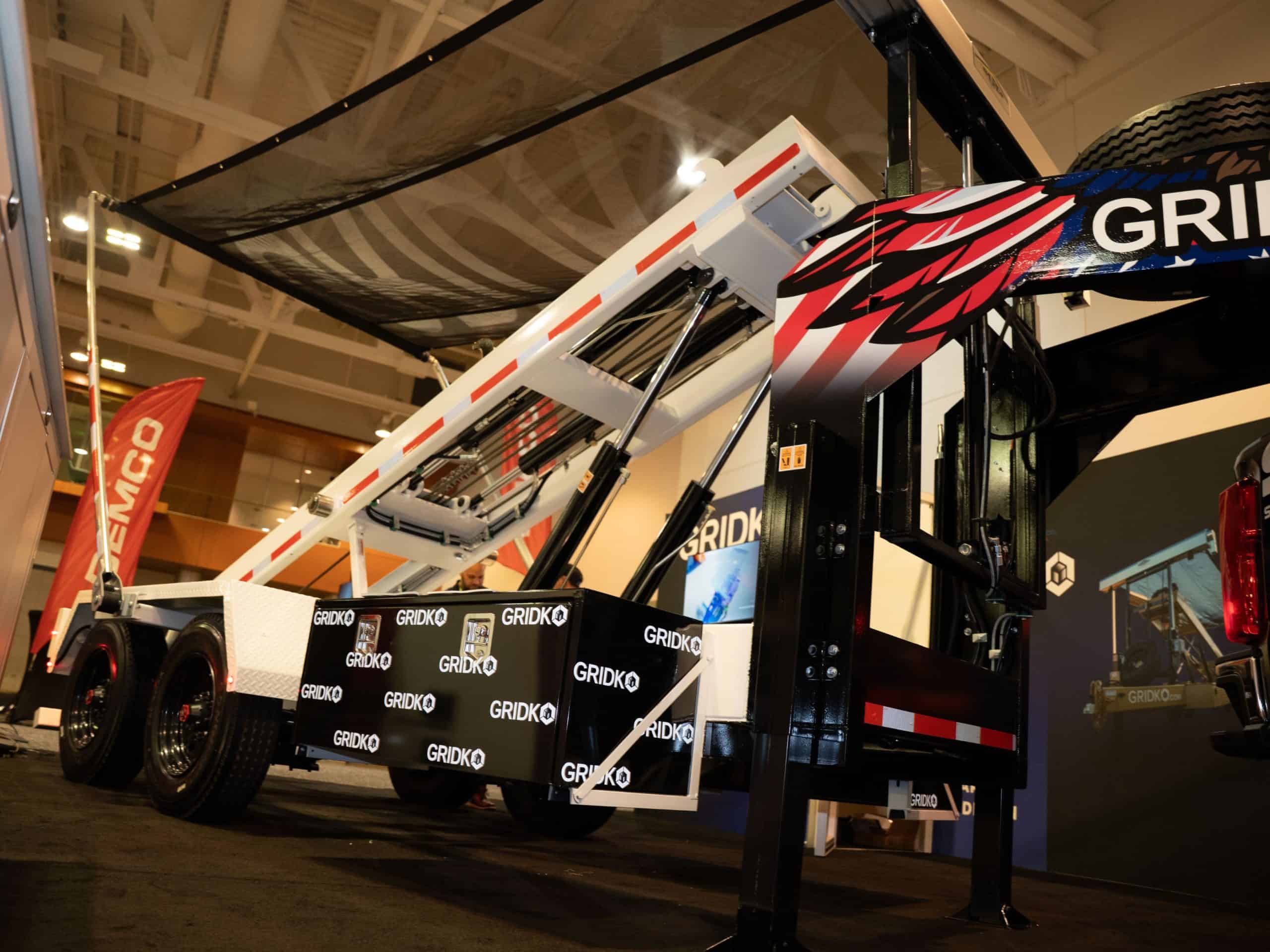
The live drive PTO system wasn’t an add-on to an existing trailer design. Gridko built the whole trailer around it, and every dimension got reconsidered with that idea in mind. The team engineered and manufactured a compact 16 ft gooseneck configuration paired with a reeving system, the cable and pulley arrangement that controls how the hoist lifts and rolls the container. They chose it for load capacity, control, and a smaller footprint than most heavy duty trailers on the market. Spreading the working load across the cable and pulley path, instead of concentrating it at one point, is part of what lets a compact frame handle the same duty cycle as a larger trailer without giving up capacity. It also means the trailer fits into tighter yards, alleys, and job sites than the longer trailers this kind of work has traditionally required.
The build itself was a full team effort. Gridko’s owners stayed hands on throughout, the head engineer led the design, and a production team of welders, hydraulics technicians, and electricians each carried a defined role. Gridko recruited that team out of commercial trucking and heavy equipment work on purpose, people who brought years of hands-on experience with them rather than approaching trailer engineering from scratch.
Taking the Trailer to Nashville
Gridko brought the trailer to the NATDA Trailer Show in 2026, one of the biggest the show has ever put on, as a first time entrant. The team wasn’t sure what to expect. What they got was a crowd.
Industry veterans, people who’ve spent entire careers around trailers, got down on the ground with flashlights to look at the live drive system for themselves. Gridko sold the expo trailer on the spot that same day, a deposit down before the show floor even quieted for the evening.
“We did not build this trailer to win an award. We built it to solve a real problem for our customers. The award just confirmed we were on the right track,” the Gridko team said.
Two Awards Won, One Trailer
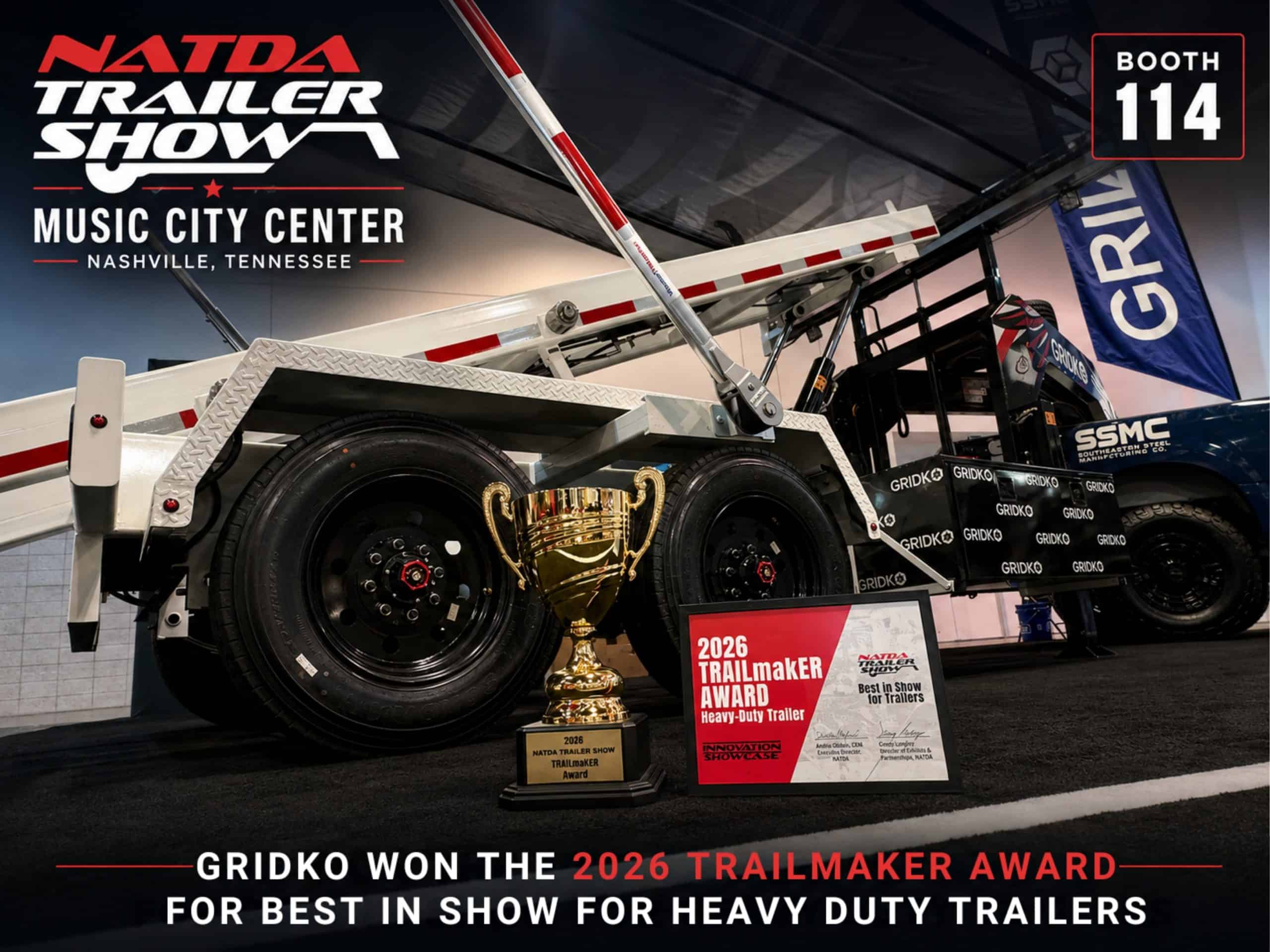
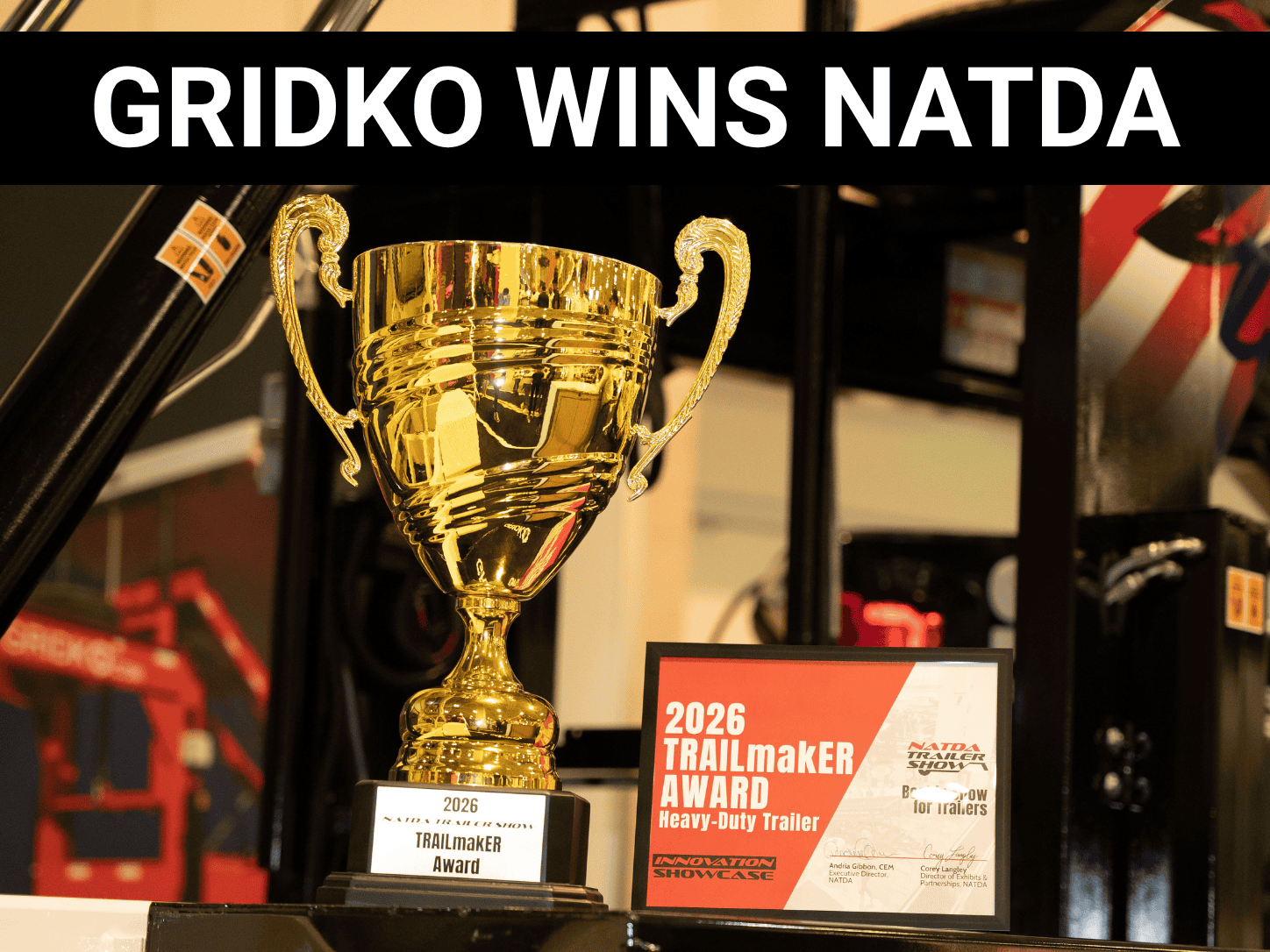
That confirmation came fast. Gridko won the Heavy Duty category outright at the 2026 NATDA TRAILmakER Awards, the top recognition the trailer industry hands out each year. Then NATDA went further, naming Gridko the Overall Trophy Recipient over the winners of every other category, Vehicle, Livestock, Cargo/Concession, and Utility. Gridko was the only builder recognized twice.
By the team’s own account, the weight of it did not really land until they were standing on the show floor watching people stop, take a second look, and come back with someone else in tow. Walking up to accept the Overall Trophy was, in the team’s words, “the biggest trophy anyone at Gridko has ever been part of receiving,” a moment that carried the late nights and the pressure of the build with it, one the whole team felt, not just whoever stood at the podium.
Winning a category tells you a trailer is built right for one kind of job. Winning the Overall Trophy tells you something bigger, that the engineering behind it holds up against everything else in the show. That’s the validation the whole team was chasing, even if the award itself was never the point.
What This Means If You’re Buying a Trailer
If you’re a dealer, a dumpster rental company, a waste hauler, a contractor, or a fleet operator, the choice between electric-over-hydraulic, a traditional pony motor, and a live drive PTO system is not just trivia. It comes down to matching the system to how hard and how often you run it. Gridko builds its roll off, gooseneck, and bumper pull trailers, along with its cable hoists for roll off trucks, around whichever of those systems fits how you actually work, backed by the same premium components and hands-on engineering that just got validated on the industry’s biggest stage.
Reach out through gridko.com to talk to a dealer or request a quote on the award winning lineup through our chat.
FAQ
What is a live drive PTO trailer? A heavy duty trailer whose hydraulic hoist runs directly off the tow vehicle’s power take off (PTO) instead of a battery or pony motor, so there’s no second engine to maintain and no battery to run down mid job.
What’s the difference between electric-over-hydraulic and fully hydraulic hoists? Both power a hydraulic hoist, the difference is the pump’s power source, electric batteries versus an engine (a pony motor, PTO, or clutch pump connection). Fully hydraulic setups deliver more power, speed, and durability.
What is a PTO Wet Kit? A kit that connects a trailer’s hydraulic system to a work truck’s existing PTO provisions. Trucks without PTO built in can instead use Gridko’s clutch pump, which bolts on and draws off the engine directly.
What did Gridko win at NATDA in 2026? The Heavy Duty category and the Overall Trophy at the NATDA TRAILmakER Awards, the only builder recognized twice at the show.
Where is Gridko based? Statesville, North Carolina, building trailers domestically for dealers and fleet operators across the United States.
Gridko; American Built. Smarter by Design.